
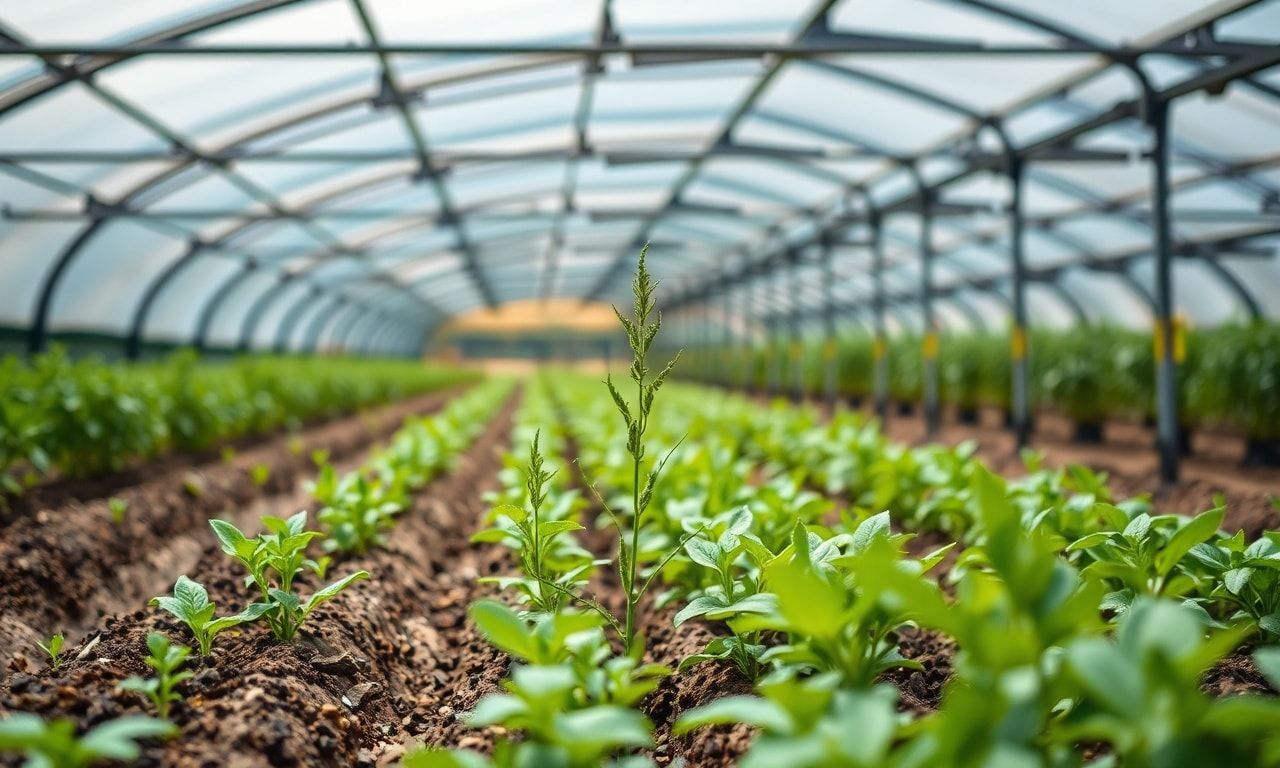
The Evolution of Agriculture: From Traditional to Technological
Agriculture has come a long way from its humble beginnings as a subsistence practice to becoming a global industry worth trillions of dollars. The sector has witnessed significant transformations over the centuries, with the most notable changes occurring in the last few decades. The advent of technology has revolutionized the way we farm, making it more efficient, sustainable, and productive. As we look towards the future, the agricultural sector is poised for even more groundbreaking innovations.
The Role of Technology in Modern Agriculture
Technology has become an integral part of modern agriculture, with advancements such as precision farming, drones, and robotics changing the landscape of the sector. These technologies enable farmers to monitor and manage their crops more effectively, reducing waste and increasing yields. For instance, precision farming uses GPS and satellite imagery to provide real-time data on soil conditions, weather patterns, and crop health. This information allows farmers to make informed decisions about planting, irrigating, and harvesting their crops.
Moreover, the use of drones and robotics in agriculture is gaining traction. Drones can be used for aerial surveys of crops, while robots can perform tasks such as planting, weeding, and harvesting. These technologies not only increase efficiency but also reduce the need for manual labor, addressing the labor shortage issue that many farmers face.
The Impact of Artificial Intelligence and Machine Learning
Artificial Intelligence (AI) and Machine Learning (ML) are also making waves in the agricultural sector. These technologies can analyze vast amounts of data to predict trends and make recommendations. For example, AI can be used to predict disease outbreaks in crops, while ML algorithms can optimize the use of fertilizers and pesticides. Furthermore, AI-powered chatbots can provide farmers with instant advice and support, helping them to make better decisions.
Looking ahead, the potential for AI and ML in agriculture is immense. According to a recent report, the global market for AI in agriculture is expected to reach $8.4 billion by 2025. This growth is driven by the increasing need for sustainable and efficient farming practices. As AI and ML technologies continue to evolve, they will undoubtedly play a crucial role in shaping the future of agriculture.
The Importance of Sustainable Practices in Agriculture
As the global population continues to grow, the demand for food is increasing at an unprecedented rate. However, this growth must be sustainable to ensure that we do not deplete our natural resources. Sustainable agriculture practices are therefore becoming increasingly important. These practices include crop rotation, organic farming, and the use of renewable energy sources.
Crop rotation is a technique that involves growing different crops in the same area in sequential seasons. This practice helps to maintain soil health and reduce the need for chemical fertilizers. Organic farming, on the other hand, involves the use of natural methods to control pests and diseases, rather than synthetic chemicals. This not only benefits the environment but also produces healthier and more nutritious food.
The use of renewable energy sources in agriculture is also gaining traction. Solar-powered irrigation systems, for example, can help farmers to reduce their energy costs and carbon footprint. Similarly, biogas plants can convert agricultural waste into clean energy, providing a sustainable source of power for farms.
The Role of Government Policies and Incentives
Government policies and incentives play a crucial role in promoting sustainable agriculture practices. Many governments around the world are offering subsidies and tax breaks to farmers who adopt sustainable practices. For example, the European Union’s Common Agricultural Policy (CAP) provides financial support to farmers who implement environmentally friendly practices.
In addition to financial incentives, governments can also promote sustainable agriculture through education and awareness campaigns. These campaigns can help to raise awareness about the importance of sustainable practices and encourage more farmers to adopt them. Furthermore, governments can invest in research and development to find new and innovative solutions to the challenges facing the agricultural sector.
The Future of Agriculture: Predictions and Trends
As we look towards the future, several trends and predictions are emerging in the agricultural sector. One of the most significant trends is the increasing use of data and analytics. Farmers are increasingly relying on data to make decisions about planting, irrigating, and harvesting their crops. This trend is expected to continue, with the global market for agricultural analytics projected to reach $1.6 billion by 2025.
Another trend is the increasing use of vertical farming and hydroponics. These methods involve growing crops in controlled environments, such as warehouses or greenhouses. This not only increases efficiency but also reduces the need for land and water. According to a recent report, the global market for vertical farming is expected to reach $12.77 billion by 2026, driven by the increasing demand for sustainable and efficient farming practices.
The use of blockchain technology in agriculture is also gaining traction. Blockchain can be used to track the origin and journey of food products, ensuring transparency and traceability. This not only benefits consumers but also helps farmers to build trust and credibility. As blockchain technology continues to evolve, it will undoubtedly play a crucial role in shaping the future of agriculture.
For those interested in the latest trends and best practices in agriculture, the tarım sektörü için en iyi uygulamalar 2026 report provides valuable insights and recommendations. This report highlights the most effective strategies for improving efficiency and sustainability in the agricultural sector, making it a must-read for anyone involved in farming.
The Impact of Climate Change on Agriculture
Climate change is one of the biggest challenges facing the agricultural sector today. Rising temperatures, changing precipitation patterns, and extreme weather events are all having a significant impact on crop yields and livestock production. According to a recent report, climate change could reduce global crop yields by up to 23% by 2050, putting millions of people at risk of food insecurity.
To mitigate the impact of climate change on agriculture, farmers must adopt resilient and adaptive practices. These practices include drought-resistant crops, improved irrigation techniques, and the use of weather forecasting tools. Furthermore, governments must invest in research and development to find new and innovative solutions to the challenges posed by climate change.
In conclusion, the agricultural sector is on the cusp of a technological revolution. From AI and ML to vertical farming and blockchain, the future of agriculture is bright. However, to ensure that this future is sustainable and resilient, farmers, governments, and other stakeholders must work together to adopt and promote best practices. By doing so, we can ensure that the agricultural sector continues to thrive and meet the growing demand for food.