
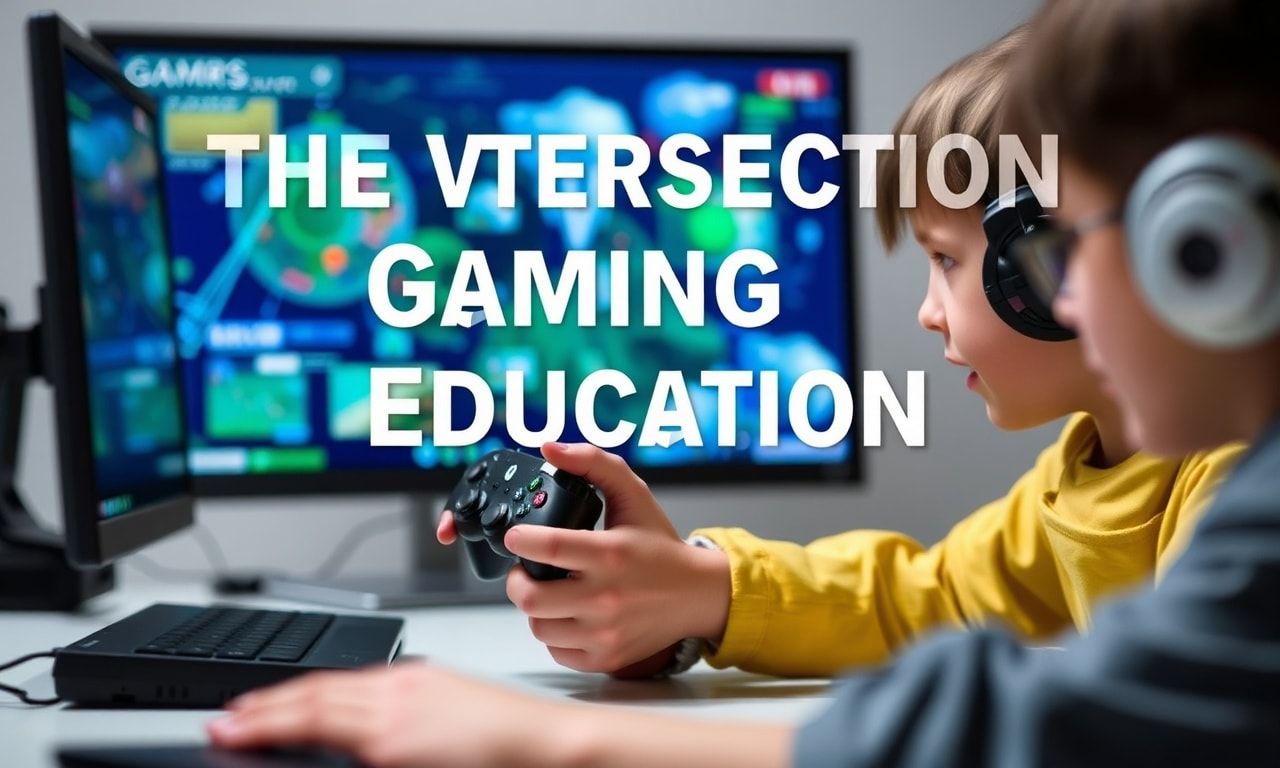
The Evolution of Gaming in Education
The landscape of education is undergoing a significant transformation, with video games emerging as a powerful tool for learning. Once dismissed as mere entertainment, video games are now recognized for their potential to engage students, enhance critical thinking, and foster creativity. This shift is driven by the realization that games can simulate real-world scenarios, making complex concepts more accessible and enjoyable to learn.
The Role of Gamification in Learning
Gamification, the integration of game elements into non-game contexts, has become a popular strategy in educational settings. By incorporating points, badges, and leaderboards, educators can motivate students to participate actively in their learning process. This approach not only makes learning more fun but also encourages healthy competition and collaboration among students. For instance, language learning apps like Duolingo use gamification to keep users engaged and motivated to improve their language skills.
Moreover, video games can provide a safe environment for students to experiment and learn from their mistakes. Simulations and role-playing games, for example, allow students to explore different scenarios and outcomes without real-world consequences. This hands-on approach can be particularly beneficial in subjects like history, science, and even business, where understanding the implications of decisions is crucial.
Enhancing Critical Thinking and Problem-Solving Skills
One of the most significant benefits of using video games in education is the development of critical thinking and problem-solving skills. Games often require players to analyze situations, make decisions, and adapt to changing circumstances. These skills are transferable to real-life situations, making students better equipped to handle challenges in their academic and personal lives.
For example, strategy games like Civilization and StarCraft require players to plan, resource manage, and strategize to achieve their goals. These games can help students understand the importance of long-term planning and resource management, skills that are valuable in various fields, including business and engineering. Additionally, puzzle games like Portal and The Witness encourage players to think creatively and find innovative solutions to complex problems.
The Impact of Gaming on Social and Emotional Learning
Video games also play a role in social and emotional learning. Multiplayer games, in particular, require players to communicate, collaborate, and work together to achieve common goals. This can help students develop essential social skills, such as teamwork, leadership, and effective communication. Furthermore, games that involve storytelling and character development can help students understand different perspectives and empathy.
For instance, games like Among Us and Overcooked! require players to work together to complete tasks and achieve objectives. These games can teach students the importance of cooperation, communication, and conflict resolution. Similarly, narrative-driven games like Life is Strange and The Last of Us explore complex themes and characters, encouraging players to reflect on their own emotions and experiences.
Addressing Concerns and Challenges
Despite the numerous benefits of using video games in education, there are also concerns and challenges that need to be addressed. One of the main concerns is the potential for games to be addictive and to distract students from their studies. To mitigate this risk, educators need to ensure that games are used in a balanced and structured manner, with clear guidelines and objectives.
Another challenge is the digital divide, which refers to the gap between those who have access to technology and those who do not. To ensure that all students can benefit from gaming in education, schools and educators need to provide equal access to technology and resources. Additionally, there is a need for more research and development in the field of educational gaming to create games that are both engaging and effective.
For those interested in learning more about the intersection of gaming and education, the interesting facts knowledge guide provides valuable insights and resources. This guide offers a comprehensive overview of the benefits and challenges of using video games in education, as well as practical tips for educators and parents.
The Future of Gaming in Education
The future of gaming in education looks promising, with advancements in technology and research paving the way for more innovative and effective educational games. Virtual reality (VR) and augmented reality (AR) technologies, for example, have the potential to create immersive and interactive learning experiences that can enhance student engagement and understanding.
Furthermore, the growing popularity of esports and competitive gaming can provide new opportunities for students to develop their skills and showcase their talents. Esports teams and tournaments can foster a sense of community and belonging, as well as provide valuable experience in teamwork, leadership, and strategic thinking.
In conclusion, video games have the potential to revolutionize education by making learning more engaging, interactive, and effective. By embracing the benefits of gaming and addressing the associated challenges, educators can create a more dynamic and inclusive learning environment that prepares students for success in the 21st century.
As World Health Day approaches, discover practical tips for enhancing your self-care routines in our latest feature, improving personal well-being.
To gain a deeper understanding of how recent developments are shaping our world, consider exploring global changes and their impact in our latest feature.
To gain a comprehensive understanding of how technology is shaping our world, consider exploring technology’s societal impact in our latest feature.