The Dynamic Dance of Earth’s Crust
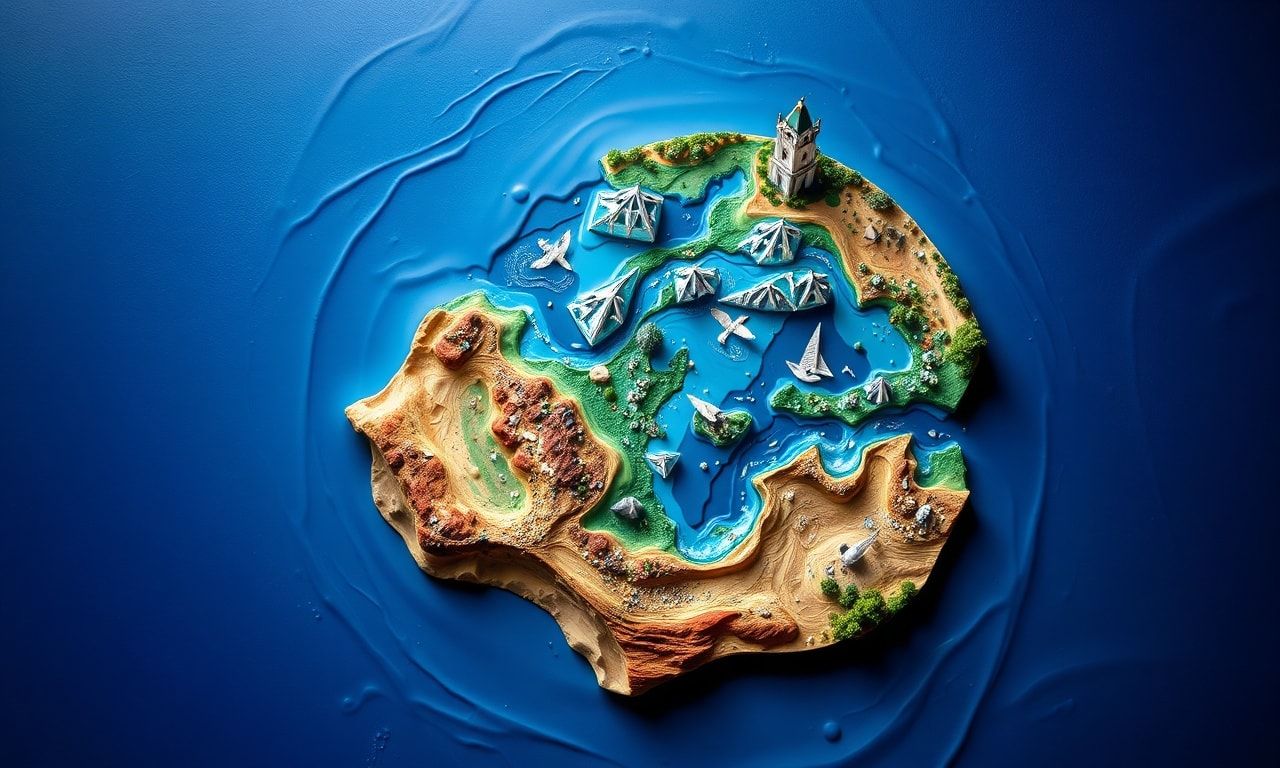
The Earth’s surface is a complex, ever-changing landscape, shaped by the slow but relentless movement of tectonic plates. These massive slabs of rock, which make up the Earth’s lithosphere, are in constant motion, driven by the convective currents in the underlying mantle. This dynamic process, known as plate tectonics, is responsible for the formation of mountains, the creation of oceans, and even the triggering of earthquakes and volcanic eruptions.
The Theory of Plate Tectonics
The theory of plate tectonics is a relatively young scientific concept, having been formally proposed in the late 1960s. It built upon the earlier theories of continental drift, which suggested that the continents were once part of a single supercontinent and had since drifted apart. The theory of plate tectonics expanded upon this idea, proposing that the Earth’s lithosphere is divided into seven major and several minor plates, which float on the semi-fluid asthenosphere beneath them.
These plates are in constant motion, albeit at a very slow pace—typically a few centimeters per year. This movement is driven by the heat generated from the Earth’s core, which causes the mantle to convect, dragging the plates along with it. The interactions between these plates at their boundaries give rise to a variety of geological phenomena, including earthquakes, volcanoes, and the formation of mountain ranges.
Types of Plate Boundaries
There are three main types of plate boundaries: divergent, convergent, and transform. Divergent boundaries occur where two plates move apart from each other, allowing magma from the mantle to rise to the surface and create new crust. The Mid-Atlantic Ridge is a prime example of a divergent boundary, where the Eurasian and North American plates are slowly pulling apart.
Convergent boundaries, on the other hand, occur where two plates move towards each other. This can result in one plate being forced beneath the other in a process known as subduction, leading to the formation of deep ocean trenches and volcanic arcs. The collision of the Indian and Eurasian plates, which gave rise to the Himalayan mountain range, is a classic example of a convergent boundary.
Transform boundaries occur where two plates slide past each other horizontally. The San Andreas Fault in California is a well-known example of a transform boundary, where the Pacific and North American plates grind past each other, causing frequent earthquakes.
The Impact of Plate Tectonics on Earth’s Geography
The movement of tectonic plates has had a profound impact on the Earth’s geography over millions of years. The opening and closing of ocean basins, the formation of mountain ranges, and the creation of volcanic islands are all direct results of plate tectonic activity. For instance, the Atlantic Ocean is slowly widening as the American plates move away from the Eurasian and African plates, while the Mediterranean Sea is gradually closing as the African plate collides with the Eurasian plate.
Plate tectonics also plays a crucial role in the Earth’s carbon cycle. The subduction of oceanic plates carries carbon-rich sediments and seawater into the mantle, where they are recycled and eventually released back into the atmosphere through volcanic eruptions. This process helps regulate the Earth’s climate over geological timescales.
The Role of Plate Tectonics in Natural Disasters
The movement of tectonic plates is also responsible for some of the most devastating natural disasters on Earth, including earthquakes and volcanic eruptions. Earthquakes occur when the stress built up along plate boundaries is suddenly released, causing the ground to shake. The 2011 earthquake and tsunami in Japan, for example, were the result of the Pacific Plate subducting beneath the Okhotsk Plate.
Volcanic eruptions, too, are often the result of plate tectonic activity. The Ring of Fire, a horseshoe-shaped area in the Pacific Ocean known for its high level of volcanic and seismic activity, is a direct result of the subduction of several tectonic plates beneath the surrounding continental plates.
Exploring the Depths: The Science Behind Plate Tectonics
Understanding the complexities of plate tectonics requires a deep dive into the Earth’s interior. Scientists use a variety of tools and techniques to study the movement of tectonic plates, including seismology, GPS measurements, and satellite imagery. These tools allow researchers to map the Earth’s lithosphere in detail, track the movement of plates over time, and predict the locations of future geological activity.
For those interested in delving deeper into the fascinating world of plate tectonics, there are numerous resources available online. Websites like ilginç bilgiler genel kültür offer a wealth of information on the subject, from the basics of plate tectonics to the latest research and discoveries. Whether you’re a student, a teacher, or simply a curious individual, these resources can provide valuable insights into the dynamic processes that shape our planet.
The Future of Plate Tectonics Research
As our understanding of plate tectonics continues to grow, so too does our ability to predict and mitigate the risks associated with geological hazards. Advances in technology, such as improved seismic monitoring networks and more accurate GPS systems, are allowing scientists to better forecast earthquakes and volcanic eruptions, potentially saving countless lives.
Moreover, the study of plate tectonics is not just about understanding the Earth’s past and present—it’s also about predicting its future. By modeling the movement of tectonic plates, scientists can make informed predictions about the future configuration of the Earth’s continents and oceans. For example, it is predicted that in about 250 million years, the continents will once again come together to form a new supercontinent, which some scientists have dubbed ‘Pangaea Proxima.’
In conclusion, the study of plate tectonics is a vital field of research that sheds light on the dynamic processes that shape our planet. From the formation of mountains and oceans to the triggering of earthquakes and volcanic eruptions, the movement of tectonic plates plays a crucial role in the Earth’s geological evolution. By continuing to explore and understand these processes, we can better appreciate the complex and ever-changing world we live in.